
In January 2025, Google made a quiet change that broke a huge chunk of the SEO industry overnight. Without any official announcement, Google started requiring JavaScript to be enabled to view search results. If you tried to load a Google search page without JavaScript, you got a blank screen and a polite request to turn it on.
For everyday users, nothing changed. Modern browsers run JavaScript automatically. But for the thousands of tools, agencies, and AI companies that quietly scraped Google's results every day to build rank trackers, keyword databases, and AI answer engines, the lights went out.
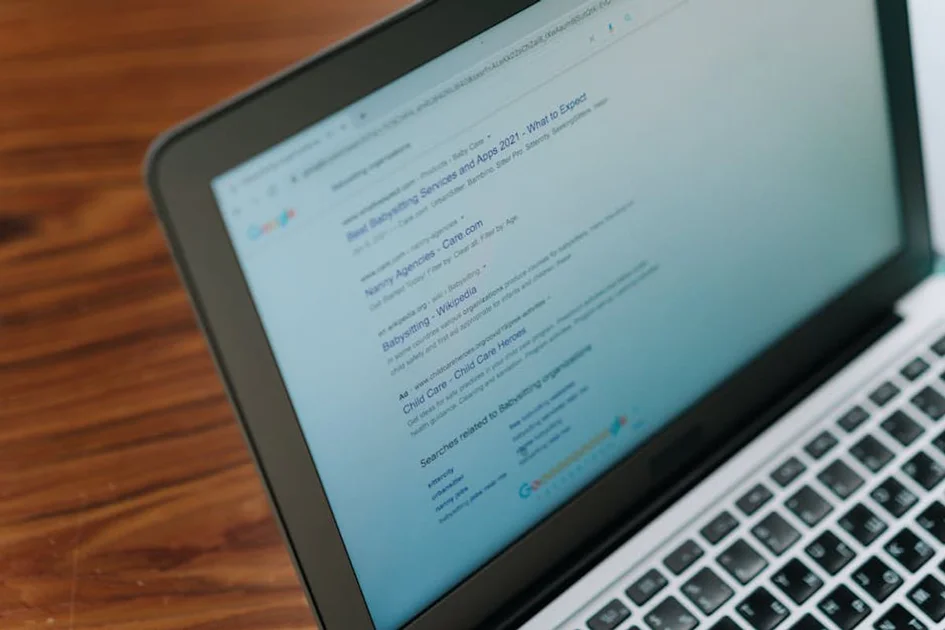
Google now wraps nearly every search result in a JavaScript shell, locking out the simple scrapers that powered most SEO tools.
If you run a local service business in Maine and you're wondering why this matters to you, here's the short version: your monthly SEO reports might be lying to you, your agency's tools may cost more than they used to, and rank tracking is messier than it has been in years. The good news is the actual work that gets you found by customers hasn't changed at all.
Let's walk through what happened, why Google did it, and what it actually means for your business.
What Google Actually Changed
For about 25 years, Google search results were served as plain HTML. Anyone with a basic script could pull up a search page, read the results, and extract the ranking positions. That's how rank trackers worked. That's how every "free SEO tool" you've ever seen worked. And plenty of automated tools, including some AI products, relied on reading Google's results the same way.
In mid-January 2025, that ended. Google started returning a near-empty page to any client that didn't execute JavaScript. The visible results, the snippets, the rich features, even the basic blue links were all rendered on the fly by JavaScript that ran in the browser. No JavaScript meant no results.
Right after the change, several SEO tools reported delays and gaps in their ranking data, and some smaller "rank checker" tools simply stopped working. If you logged into your dashboard that week and saw "no data" for a bunch of keywords, this is the likely reason.
Google didn't write a blog post about it. There was no advance warning. The change was confirmed only after reporters asked Google about it directly, and Google described it as an intentional anti-abuse measure.
Why Google Made This Move
Google's official line is that the change was meant to "better protect our services and users from bots and evolving forms of abuse." Translation: they were sick of being scraped to death.
Many people in the industry believe AI answer engines were a big part of the reason. AI tools need current information about the web, and Google's results are one of the richest sources of it. Reading those results at scale is exactly the kind of automated traffic the change makes harder.
If that's the motive, it makes sense from Google's side. Heavy scraping uses Google's expensive search infrastructure for free, and some of the tools doing it are built to replace Google search. Why click ten blue links when an AI tool can just give you a synthesized answer?
The shift to JavaScript-required results fits a larger pattern. Automated access to Google's results keeps getting harder. Google has since stopped letting tools load 100 results on one page, which made deep rank tracking more expensive and lowered the impression counts many sites see in Search Console. More of the page now sits in features like AI Overviews that are even harder to scrape consistently. Plan on Google's data getting harder and more expensive for third-party tools to collect, not easier.
There's a side benefit for Google: rendering JavaScript takes far more computing power than reading plain HTML. By forcing every scraper to run a full browser to read results, Google made large-scale scraping slower and more expensive.
The Impact on Your SEO Tools
SEO platforms have had to adapt how they collect Google data. Here's the general picture.
Rank-tracking tools have had to adapt their crawlers to Google's JavaScript-rendered results.
The big SEO platforms now need to render results in a real browser environment, a "headless browser," to read them reliably. That works, but it's slower and more expensive than reading plain HTML, and that cost can show up in prices or in how often your rankings refresh.
Local rank trackers, the tools local SEO providers use to follow map pack positions (the map and short list of businesses Google shows for local searches), face the same pressure to keep their data accurate.
Smaller and free tools felt it most. Some stopped working, and others now buy their data from third-party providers that run headless browsers at scale and spread the cost across many customers.
One of the trickier side effects: the data that does come back is sometimes less accurate than it used to be. Google's results can vary based on browser fingerprints, location signals, and dozens of other factors. A page that ranked 4th for a keyword yesterday might show up 7th today, not because anything actually changed, but because the result was personalized differently.
What This Means for Your Local Business
Here's where it gets practical. If you've been working with an SEO agency, or if you've been checking your own rankings with a tool like Semrush or BrightLocal, there are three things to watch for through 2026.
1. Your Monthly Reports May Have Stale Data
If your agency sends you a monthly ranking report, ask them how often their tool refreshes data and what method it uses. A report dated April 1 that's actually pulling rankings from March 22 isn't useless, but it's not real-time either. Decisions based on lagging data lead to lagging strategy.

If your monthly SEO report shows wild week-over-week swings in rankings, the cause is often the tool, not your actual visibility.
2. Phantom Ranking Changes
Because Google results vary by location, device and other signals, you may see a keyword "drop" five positions in your rank tracker even though nothing on your site changed and you're still getting the same calls. Don't panic and don't tear up a strategy that's working based on a single weird data point. Look at actual business outcomes: phone calls, form submissions, and direction requests. Those don't lie.
3. Tools Cost More
If your agency has raised prices, this may be part of the reason. The data infrastructure that powers SEO has gotten meaningfully more expensive. The good news is that for a small local business, you don't need an expensive enterprise tool stack. A solid local SEO program mostly relies on Google Business Profile data, Google Search Console (which is free and comes straight from Google), and clean tracking on your own website.
Some agencies are using the JavaScript change as cover to justify big price increases without delivering more value. Others are quietly switching to cheaper, less accurate data sources and not telling clients. Ask your agency directly: what tool are you using to track my rankings, how often does it refresh, and how do you handle the new accuracy issues? A good agency will give you a straight answer.
The Connection to AI Search
The JavaScript requirement isn't happening in a vacuum. It's part of a broader battle over AI search, and my guide on how local businesses show up in ChatGPT and AI answers covers what that means for your listing. Google is fighting on two fronts at once: trying to keep AI competitors from harvesting its data, and trying to keep its own users from leaving for AI-first answer engines.
The same JavaScript shell that locks out scrapers also lets Google inject AI Overviews, dynamic map packs, and personalized features without giving away the underlying data. It's a defensive move and an offensive one at the same time.
For local businesses, this matters because it confirms a trend I've been telling clients about for two years: Google is becoming a destination, not a directory. More searches end on Google itself, with the answer pulled directly from your Google Business Profile, your reviews, and your structured data. That's why optimizing your Google Business Profile, building genuine reviews, and getting your on-site SEO right matter more than chasing position changes in a rank tracker.
What Hasn't Changed at All
Here's the most important paragraph in this article. The work that actually drives leads to your business has not changed. The JavaScript requirement is interesting industry news, but it's a story about how SEO tools work, not about how SEO itself works.
If you're a plumber, an electrician, a contractor, or a law firm in Maine, the things that get you found by customers in 2026 are the same things that got you found in 2024:
- A complete, active Google Business Profile with real photos, current hours, and posts whenever you have news
- Genuine reviews from actual customers, with thoughtful responses from you
- A fast, mobile-friendly website with clear service pages and unique location pages
- The same business name, address and phone number (NAP) across the directories Google trusts
- Real content written for your customers, not for a keyword density tool
- Schema markup so Google can confidently understand who you are and what you do
None of that work depends on whether your rank tracker refreshed at 3am or 3pm. None of it cares whether Semrush's crawler can read a search page in HTML or in rendered JavaScript. It's the same blocking and tackling that has worked for over a decade and will keep working.
Your single most reliable source of truth for SEO performance is Google Search Console. It's free, it's owned by Google, and the data is direct from the source. If you only check one tool every month, check that one. I set Search Console up for every local SEO client as the very first thing I do.
How to Handle the Change
My advice for handling all of this is simple.
Compare rank-tracker reports with Search Console and Business Profile performance. Check the dates, queries, locations, and devices before reacting. And remember that weekly ranking volatility is normal and not a reason to change strategy.
Beyond that, the actual work didn't change. Whether you're a plumber in Portland, an electrician in Bangor, a contractor in Ellsworth, or a dental practice in Augusta, you need the same things: complete profiles, fast sites, and real reviews.
For more on where things are heading, see why your competitors rank higher (with the seven local SEO mistakes I see most), how local businesses show up in ChatGPT and AI answers, and what a sensible small business marketing budget for 2026 looks like.
Bottom Line
Google's JavaScript requirement was a major event for the SEO industry, but it's a small one for your business. The story is real and the impact on tools is real. Reports may be a little stale, prices may be a little higher, and rank tracking is a little messier. None of that changes what you actually need to do to get found by more customers.
Focus on the work, not the dashboards. Keep your Google Business Profile alive. Earn real reviews. Build a site that loads fast and tells your story clearly. Track the calls and form fills that actually pay your bills, not the impression counts that don't.
If you’d like a straight-talk review of where your business stands and whether your current SEO setup is built on solid ground or shifting sand, I can help. My SEO service is built for local Maine businesses that want measurable results without the jargon. Just email me or text me at (207) 598-1219 and I’ll take a look.